

Check out the Museu Vale’s February schedule:
MV Educational Program: Educational Activities at the Vale+Community Beach Event
Date: February 1st (Sunday)
Time: 8 AM to 12 PM
Location: Camburi Beach, Mata da Praia neighborhood (next to Maho Gastrobar).
The Museu Vale is bringing the Wagon Cart to the Vale+Community Beach event, which will take place at Camburi Beach in Vitória.
The Wagon Cart is a project of the Museu Vale’s Educational Program that brings activities related to the history of the railroad to different regions of Espírito Santo. Using a mobile educational tool, the project proposes an interactive immersion, with mediations involving photography, sounds, and reflections on railroad history.
Created in partnership with the Memory Center’s curatorial team, the “Carrinho Vagão” (Wagon Cart) project integrates the contents of the Museu Vale with the history of the railroad, promoting an enriching exchange between participants and the museum’s collection. The project seeks to strengthen cultural and educational ties between the community and the local historical heritage.
This action is part of the 60th anniversary celebration of the Tubarão Vale Unit.
Exhibition “Vidas em Cordel” (Lives in Cordel) – Botanical Park Edition
Dates: February 1st to 28th
Location: Vale Botanical Park
The exhibition “Vidas em Cordel,” a partnership between the Museu Vale (ES) and the Museu da Pessoa (SP), tells life stories in a language full of rhyme, art, and tradition. The exhibition, which originally featured twenty-two life stories in the form of illustrated cordel pamphlets, brings to its version in the Educational Room of the Vale Extramuros Museum, in the Vale Botanical Park, panels illustrated with woodcuts that pay homage to figures such as Dona Domingas, a symbol of the struggle of the black population of Espírito Santo.
The exhibition will also highlight the trajectories of two female leaders from Espírito Santo: Regina Maria Ruschi, founder of the Barra de Renda Group, which maintains the tradition of bobbin lace in Barra do Jucu, Vila Velha; and Dilvana Silva Santos, who led selective waste collection and environmental education in Colatina, heading an association of waste pickers.
Carnival program at the Museu Vale
Dates: February 3rd to 28th
Time: Tuesday to Friday, 8:00 AM to 4:30 PM. Saturdays and Sundays, 9:00 AM to 4:30 PM
Location: Extramural Educational Room at Vale Botanical Park
February 3rd to 15th | Workshop: Carnivalizing with Contemporary Art
Throughout February, the Museu Vale’s Educational Department invites the public to immerse themselves in Brazilian art and contemporary artists who have marked the institution’s history. The activity starts with the sensory experiences of Lygia Clark, with her masks and the emblematic Elastic Network; in addition to the work The Penetráveis by Hélio Oiticica, Divisor by Lygia Pape, and the multiple expressions present in the works of Heitor dos Prazeres.
The workshop expands with content inspired by the cultural manifestations of Espírito Santo, building an environment that functions as a large installation. In this scenario, the public is invited to create and imagine other possible carnivals, reflecting on celebration, body, territory, and identity.
February 19-28 | Workshop: Other Carnivals
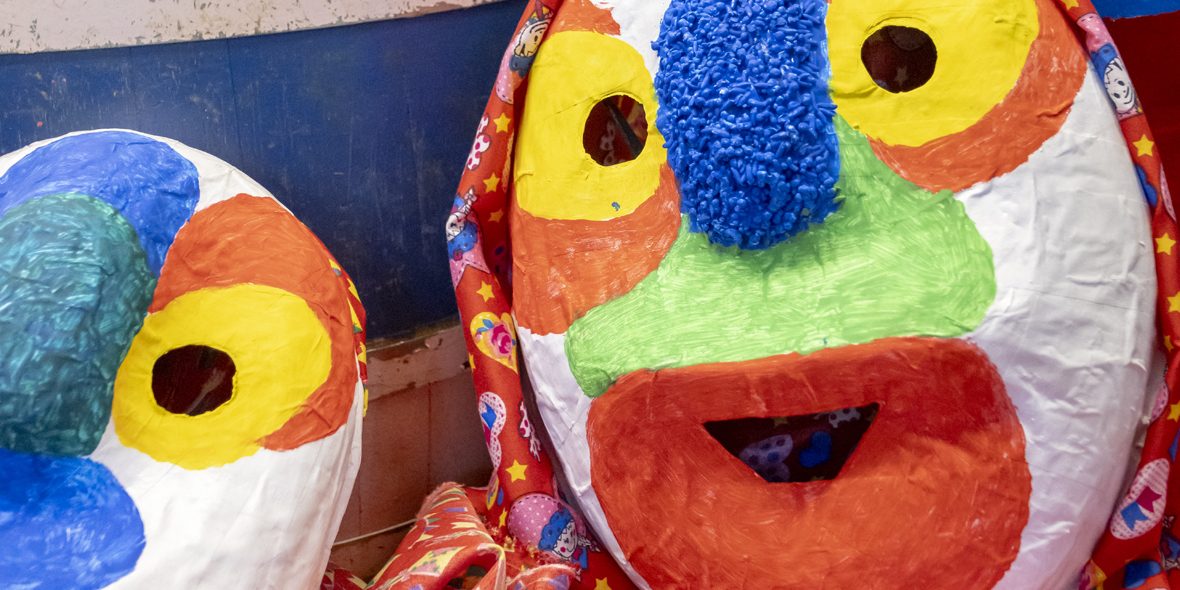
By integrating Carnival with the multiple expressions of Espírito Santo’s culture, we open space for other carnivals to take place. Among them, the Congo Carnival of Roda D’Água stands out, one of the most emblematic popular manifestations of Espírito Santo. Laden with symbolism, the Congo brings together elements ranging from the playful and subversive nature of masks and allegories to the strength of resistance, devotion, and the striking beat of drums and jackets.
The workshop “Other Carnivals” proposes the recreation of miniature dolls inspired by the aesthetics of the character João Bananeira, a traditional figure in the Congo festivities. Using organic and recyclable materials, participants are invited to explore forms, textures, and narratives that permeate this ancestral manifestation.
The Congo festivities draw crowds and strengthen identities by fostering encounters between traditional peoples, quilombola communities, local residents, and visitors from diverse backgrounds. Their processions and celebrations act as bridges connecting times and territories, ensuring the transmission of knowledge and the preservation of traditions that remain alive through the strength of the collective.

Fale conosco
Redes sociais